Written together with AI. How, on the About
Is the Free ChatGPT Plan Enough? Your Own Usage Is the Answer
OpenAI studied a full month of real ChatGPT messages from over a billion users, and the results are surprising. This piece looks at what people actually use it for, how work and personal use differ, and whether upgrading from the free plan is worth it.
In this article
You have been using for almost a year. The free plan occasionally runs out of quota, and you keep wondering whether to upgrade, but you are afraid of paying for something you will barely touch. Or maybe you have never paid a cent, you are just curious what everyone else, the people who open ChatGPT every single day, is actually asking it.
As it happens, OpenAI answered this question itself, and the answer is more concrete than you might expect. In August this year, OpenAI published a usage report called Signals. It analyzed the real messages sent by more than a billion users in June 2026.
This piece breaks that data down: what people actually use ChatGPT for, how work use differs from personal use, and whether the free plan can really keep up with what you need. By the end you will have a way to judge this for yourself, instead of guessing.
What Do Most People Actually Use ChatGPT For
Most people ask questions, look for advice, and edit text. Very few hand over an entire piece of work for ChatGPT to finish start to finish.
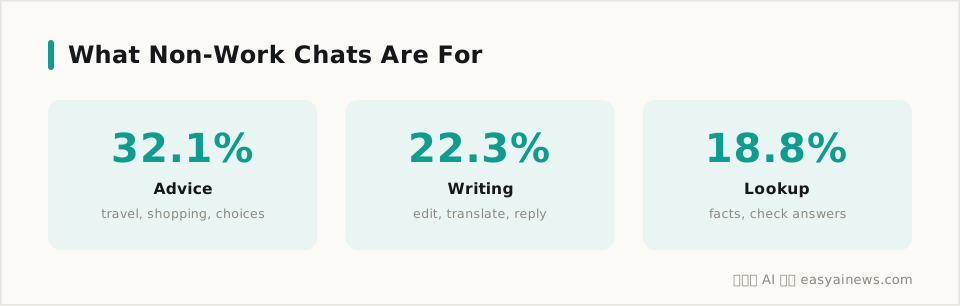
In the report, 69.6 percent of messages had nothing to do with work. Within that group, seeking advice made up 32.1 percent, looking up information made up 18.8 percent, and writing or editing made up 22.3 percent, together well over seventy percent. How to plan a trip, which fridge to buy, how to phrase a note to your kid's teacher, how to make a message sound more polite. These are the things most people are actually asking, day after day.
The report also shows ChatGPT is no longer just a tool for young, tech-curious users. Messages from people 35 and older rose from 28.3 percent to 33.6 percent of the total in a single year. Messages associated with female names rose from half to 53.3 percent. The user base keeps getting more ordinary, and the questions keep getting more everyday.
How people talk to it is changing too. Photos, PDFs, and voice messages now make up 7.8 percent of all messages, and in places like Brazil and Colombia that share is above one in ten. Snap a photo of a menu and ask what to order, snap a contract and ask what the key terms are. More and more people skip learning how to type a clever and just hand it whatever is in front of them.
That is the average across everyone, mixed together. Once you split work from personal use, the same person's habits change completely.
Does AI Behave Differently at Work
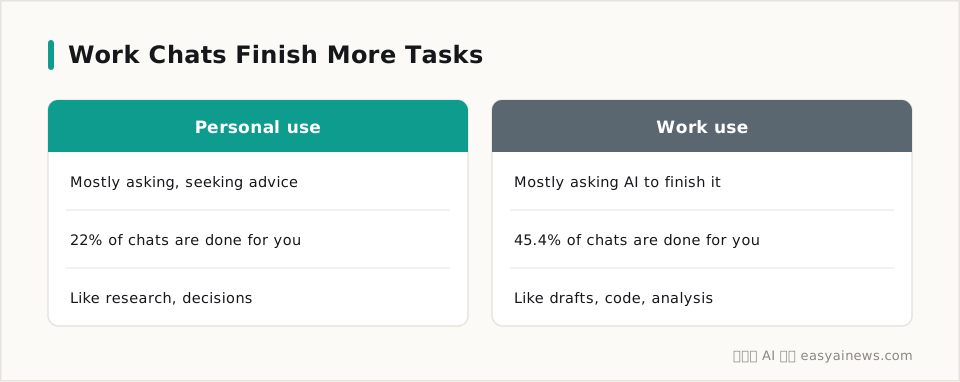
Yes. In work messages, the share where people ask ChatGPT to just finish the task is more than double what it is outside work.
In personal use, having ChatGPT complete something outright, rewriting, coding, analysis, and the like, accounts for 22 percent of messages. In work use that jumps to 45.4 percent. The extra share is mostly the in between steps: pulling data, organizing, comparing, drafting, all of it handed over to AI.
So is AI already taking jobs? The report does not go there. None of these individual steps amounts to a full job on its own, but strung together, they are clearly reshuffling how a workday actually gets spent. Less time spent digging up information, possibly more time spent checking and adjusting what AI produced.
If work relies on it more heavily, can the free plan actually keep up?
Is the Free Plan Actually Enough
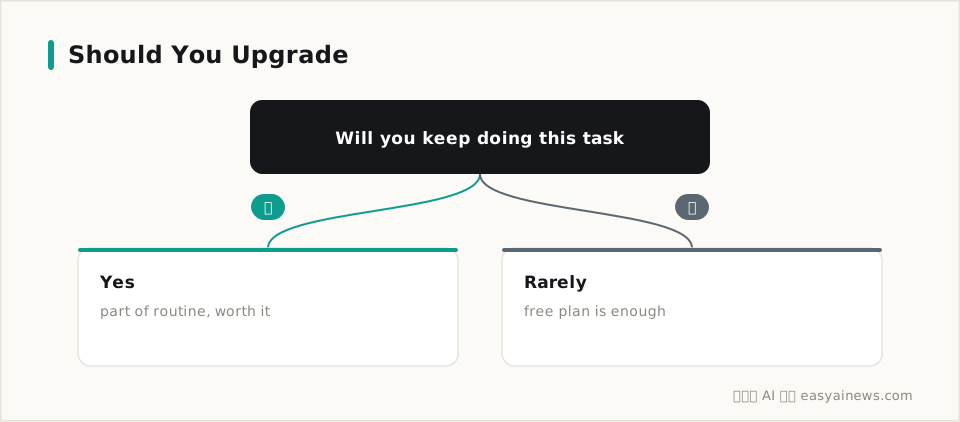
Whether it is worth paying comes down to whether AI has made it into something you do regularly, not whether the free plan is smart enough.
The same report splits users by paid plan, and the pattern is clear. For free users, work related messages make up 25.8 percent of the total. For the cheaper Go plan it is 42.1 percent. For the more common Plus plan, around 20 dollars a month, it is 46.2 percent. For the priciest Pro plan, around 200 dollars a month, it is 58 percent. The more someone pays, the deeper AI has been folded into their work, and that order is no coincidence.
You might think, well of course, the more you pay the more you use it. Fair, but it is more useful read the other way around. Figure out first whether AI has genuinely taken over something you do every week, then decide whether to pay for it. How smart the newest model is, or how it scores on some benchmark, tells you very little about that.
I wrote before about what ChatGPT actually is, a plain guide for people who have never used it, and mentioned that the free plan is plenty for a first time user. This data fills in the next step: when it is actually worth upgrading.
So how do you know if you are the kind of user who should upgrade?
How Do You Know If the Free Plan Can Keep Up
Pick something you do every week and use it as a test. That tells you more than reading a spec sheet ever will.
Choose a task that recurs in your work or your life, and get specific about what you would feed it, what constraints apply, and what you would count as a good result. Every time you switch models or consider upgrading, run that same task again, and compare how the free plan holds up against the paid one.
The logic behind this is simple. The gap between free and paid rarely shows up on a single question. It shows up after you run the same task ten or twenty times, and you see who keeps up and who starts to slip. Whether it is a weekly report draft, a recurring household budget, or teaching materials you prepare on a regular basis, the principle is the same. Get clear on what you actually need it to do, run the free plan against it, and wherever it stalls is your answer on whether that extra payment is worth it.
Whether the free plan can keep up is not written on any spec sheet. The answer is sitting in that one task of yours.
If You Only Remember Three Things
- For most people's everyday questions, lookups, and writing, the free plan is already enough. There is no rush to upgrade.
- Before paying, check whether AI has made it into something you do every week, not how smart the newest model claims to be.
- Pick something you do often as a test, run it repeatedly, and wherever the free plan stalls is your answer.
- Once you upgrade, it only pays off if you actually fold it into a regular routine. For occasional questions, the free plan wins every time.
You do not need to decide right now whether to upgrade. Try this method once, and the answer will show up on its own.