Written together with AI. How, on the About
Is That Video Call an AI Deepfake? What You Can Check in the Moment
Scammers now use real-time AI face-swapping to impersonate bank staff, bosses, even family on video calls, and the footage barely shows a flaw. Real cases plus tests researchers verified, things to try mid-call instead of finding out you were scammed later.
In this article
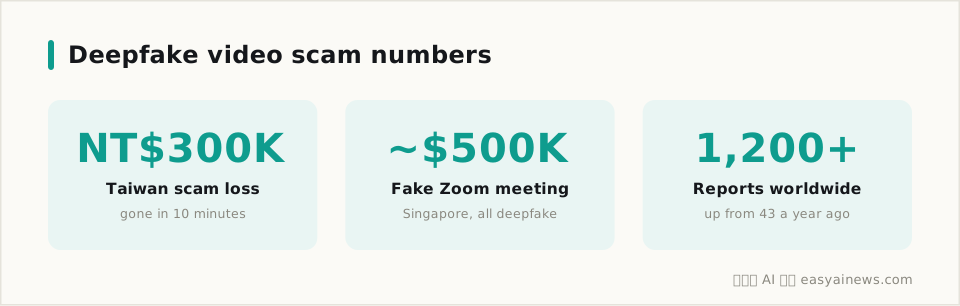
If you suspect the person on your video call is an AI , the fastest way to check is asking them to do something they haven't rehearsed, turning their head to a full profile, or waving a hand across their face. Those two moves are where face-swapping software breaks down first. A woman in Taiwan learned that the hard way in July this year: she got a video call from what looked like her bank's staff, AI face swapped onto the caller, and lost NT$300,000 within ten minutes of following the caller's instructions.
This isn't hype. In August, Germany's Fraunhofer Institute for Secure Information Technology unveiled a prototype that flags deepfakes in real time, built because most detection tools only scan once at the start of a call and miss an attacker who joins looking clean, then swaps faces partway through. Reported cases of this kind of scam have climbed fast worldwide too, from roughly 43 a month a year ago to more than 1,200 now.
This piece pulls together the tests security researchers have actually verified, plus a free tool available in Taiwan, into a handful of things you can do the moment you're on a call like this.
Why Is a Deepfake So Hard to Catch on a Live Video Call?
Today's face-swapping software runs in real time, tracking your caller's face as they actually move and talk.
Older fakes had to be recorded and swapped in ahead of time, and the seams showed: blurry footage, lighting that didn't quite match. That's not the case anymore. The AI now calculates frame by frame, matching lip movement and responding normally when you ask it something. Last year, a finance executive at a multinational company in Singapore joined a Zoom call where every other participant, including his own boss, turned out to be a live deepfake. He wired away close to half a million dollars before anyone caught on.
You might think blurry footage and odd lighting would still give it away. The difference is that this generation runs live and can hold a normal conversation with you, so judging it by whether it looks real isn't enough anymore.
Watching the screen alone won't settle it. You need a test that forces it to slip.
What Are the Two Best Tests You Can Run in the Moment?
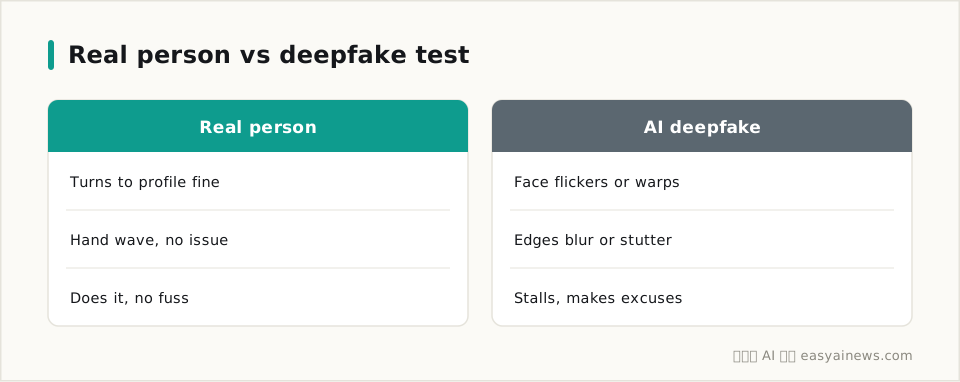
The two most effective tests are asking the person to turn their head to a full profile, and asking them to wave a hand quickly across their face.
Face-swapping models get trained mostly on frontal and slightly angled photos scraped from social media, so a full profile angle or a hand suddenly blocking the face pushes the software into its weakest spot, where flickering, warped edges, or a stutter tend to show up. If the person hesitates, makes an excuse, or refuses a request this simple, treat that as the biggest red flag of all, more telling than anything you'll spot on screen.
That lines up with exactly why Fraunhofer's team built a continuous detector in the first place: most deepfakes can't hold up through an entire call of back and forth interaction. Their software does that analysis nonstop. On your own call, the test you improvise on the spot does the same job.
Neither test is foolproof though, the technology keeps improving, so it helps to have a second layer of verification ready.
What If You Still Can't Tell Just by Watching?
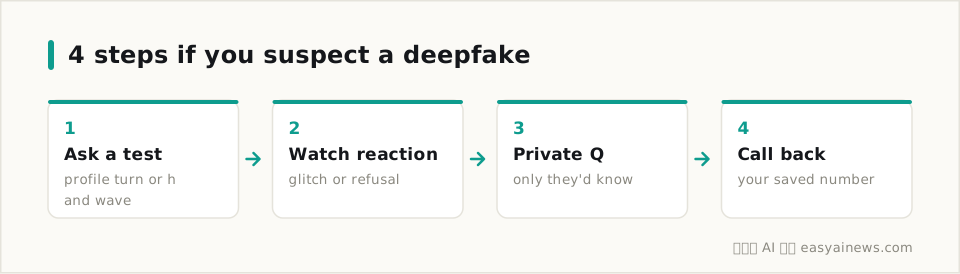
If you're still not sure, ask something only the real person would know, or hang up and call back through a number you already had saved.
It's the same logic covered in a companion piece on LINE scams, just applied to a face on screen instead of text or a voice. Taiwan also has a free tool that helps with exactly this: Trend Micro's AI Scam Buster app, a partner of the police's 165 anti-fraud hotline, can analyze a video call in real time for unnatural edges around the face or an odd blink rate, and flags a suspected deepfake the moment it spots one, an extra set of eyes on the screen alongside your own.
Whether or not you're running a tool, the same principle applies once someone asks for a transfer or your ID details.
Someone Suddenly Asks You to Wire Money. Now What?
The moment a video call turns into a request for a transfer, a verification code, or a photo of your passbook, treat it as fraud first and sort out the truth afterward.
So how do you tell a genuine emergency from someone pressuring you? The scripts rarely change: your account needs fixing right now, please don't mention this to anyone else, pay through some unfamiliar method, or the receiving account doesn't even carry the right name. These red flags show up whether the scam arrives by text, voice, or video. The only thing AI face-swapping changed is that video now feels more trustworthy than it used to.
Once you can spot those flags, what's left is the handful of things you'd actually do the moment it happens.
Five Things Worth Remembering
- Ask the person to turn to a full profile or wave a hand across their face. A real person does it without thinking; an AI deepfake often glitches right there.
- If they hesitate, stall, or make an excuse not to, treat that alone as a strong warning sign.
- Still can't tell? Ask something only the real person would know, or hang up and call back on a number you already had saved.
- If you've got an anti-fraud app like AI Scam Buster installed, open it during the call and let it scan the feed in real time.
- The moment a video call turns into a request for money, a code, or your passbook, treat it as fraud. When unsure, call Taiwan's 165 anti-fraud hotline.
However good the deepfake looks, it still can't hold up against a test you improvise on the spot through an entire call. That one extra step beats filing a police report after the money is gone.